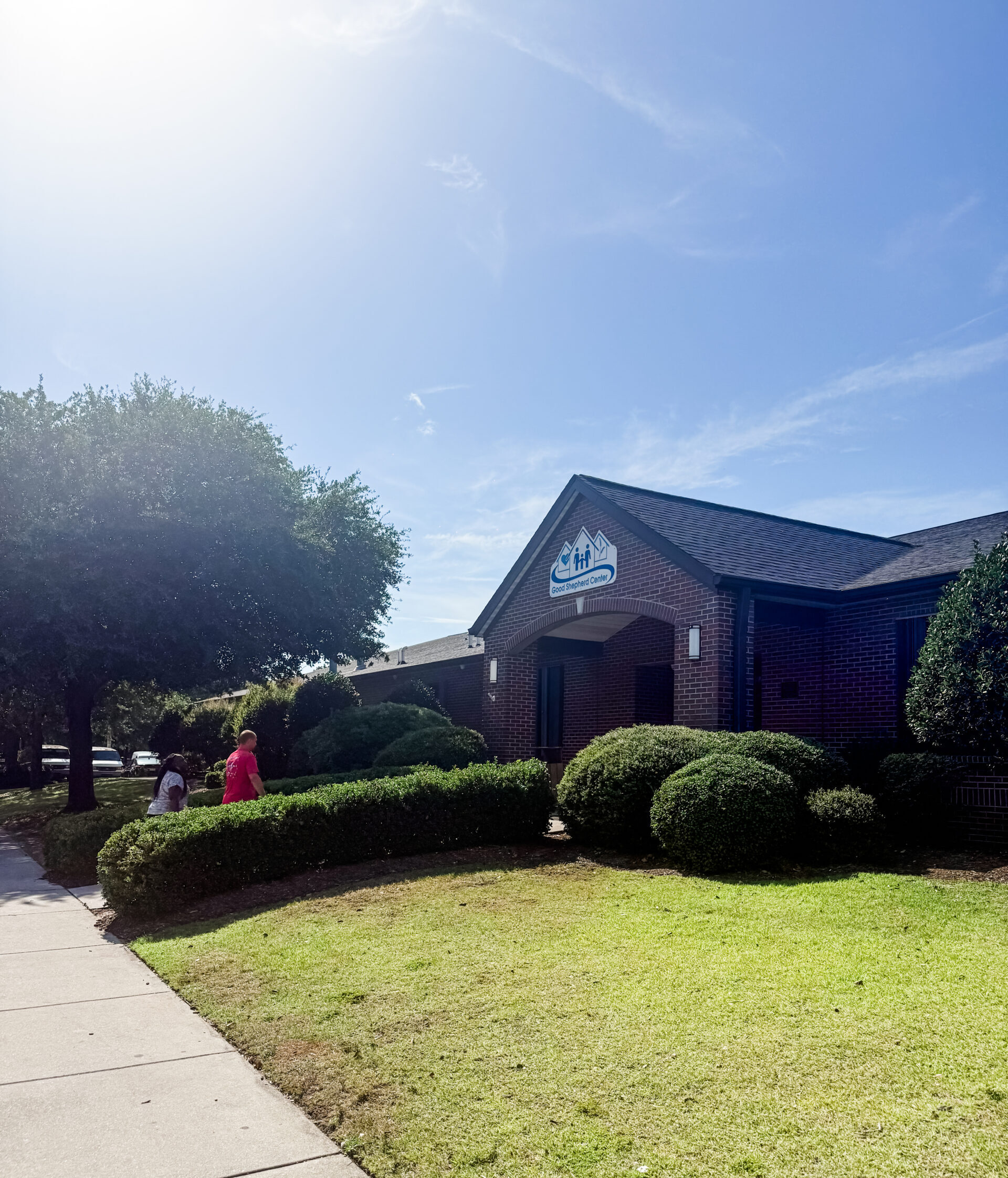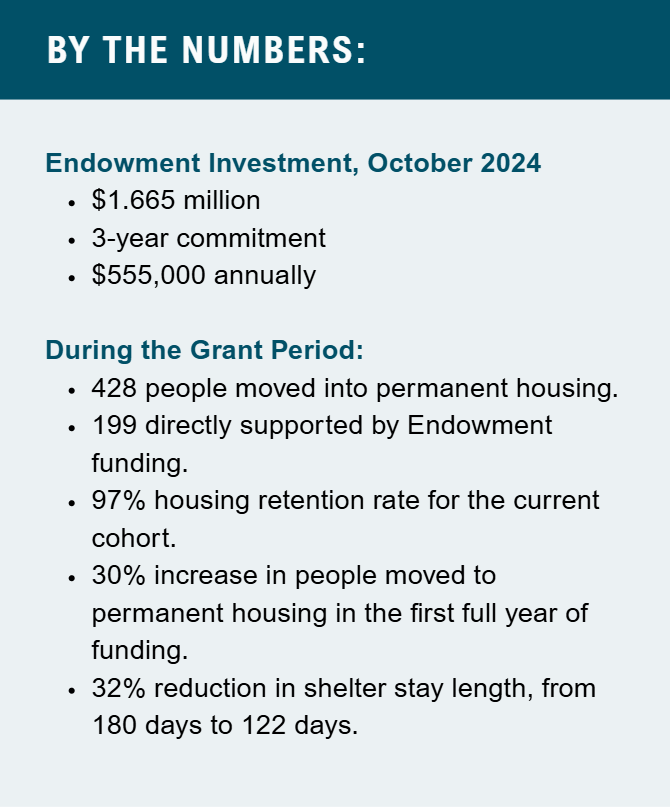


In October 2024, the Endowment granted Good Shepherd Center a three-year grant commitment for $555,000 each year totaling $1,665,000. The grant was to provide sustained support for our Rapid Rehousing and Housing Retention programs. This effort builds on 18 years’ experience using housing-focused Best Practices to end the homelessness of a diversity of neighbors, single men and women, families with children, seniors, Veterans, persons with disabilities, and to assist them in remaining housed.
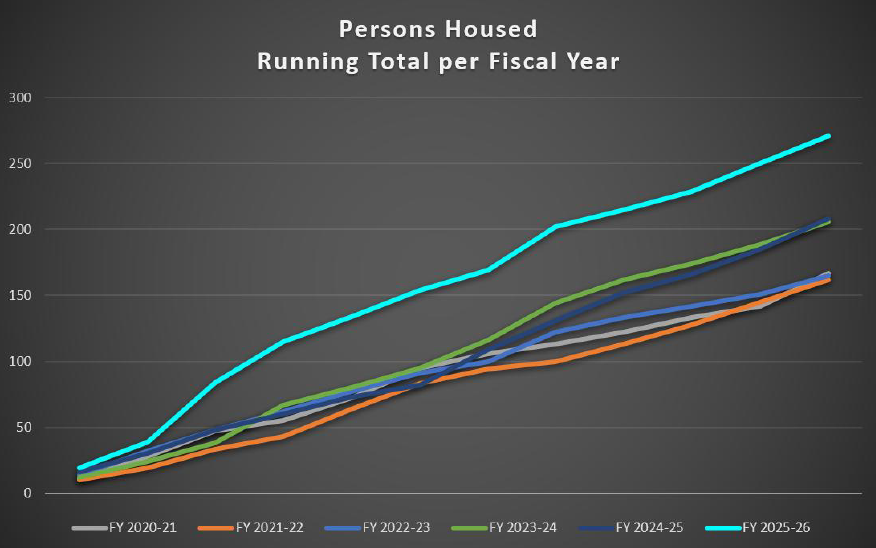
“Grant funding has ensured our continual ability to provide homeless households with first and last month’s rent, security deposits, and/or utility support, accelerating their transition to permanent housing. During the grant period, we have helped 428 unduplicated persons move to permanent housing. 199 of these people were directly supported by Endowment grant funds, with an average support amount of $2,949. Fiscal year 2025-26 was the first full year impacted by these grant funds and we were able to increase the number of people moved into permanent housing by 30%. Our team of four Case Manager/Housing Specialists help shelter guests develop individual housing plans, which is supported by housing navigation, connection to appropriate services, and engagement in continual landlord recruitment and relationship development. All of this is underpinned by applying national Best Practices learned from the Corporation for Supportive Housing, North Carolina Coalition to End Homelessness, and the National Alliance to End Homelessness.
In addition to Rapid Rehousing support, the Endowment’s grant provided funds for Housing Retention, another Best Practice intervention that Good Shepherd has committed to learning and implementing.
These funds are utilized to stabilize situations where a rehoused, formerly homeless household may have experienced a new crisis jeopardizing their housing, such as a medical emergency, an unexpected car repair for work transportation, or a loss of income. These funds have directly supported 71 individuals, with an average spend of $1,789 per person.
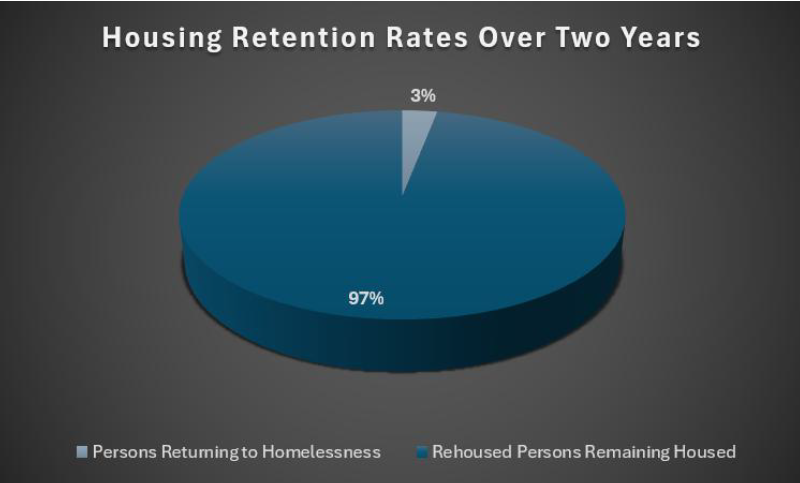
While that is a small percentage of the thousands of individuals who Good Shepherd has helped move into permanent housing over the years, it does assist with preventing returns to homelessness. Specifically looking at the 199 individuals who have moved to permanent housing over the grant period, the current housing retention rate is at 97% during the first two years. Since this cohort is still within its two-year retention window, we expect the rate to normalize slightly as more households reach the full measurement period. Based on previous rates from our programs, we expected it to stay close to a 90% retention rate.
This puts Good Shepherd ahead of national benchmarks. The National Alliance to End Homelessness sets 85% as the standard for a high-performing Rapid Rehousing program at one year and published two-year retention rates in comparable programs run closer to 75%.
The National Alliance to End Homelessness sets 85% as the standard for a high-performing Rapid Rehousing program at one year and published two-year retention rates in comparable programs run closer to 75%.
For Additional information: https://endhomelessness.org/resources/policy-information/rapid-re-housing-a-history-and-core-components/
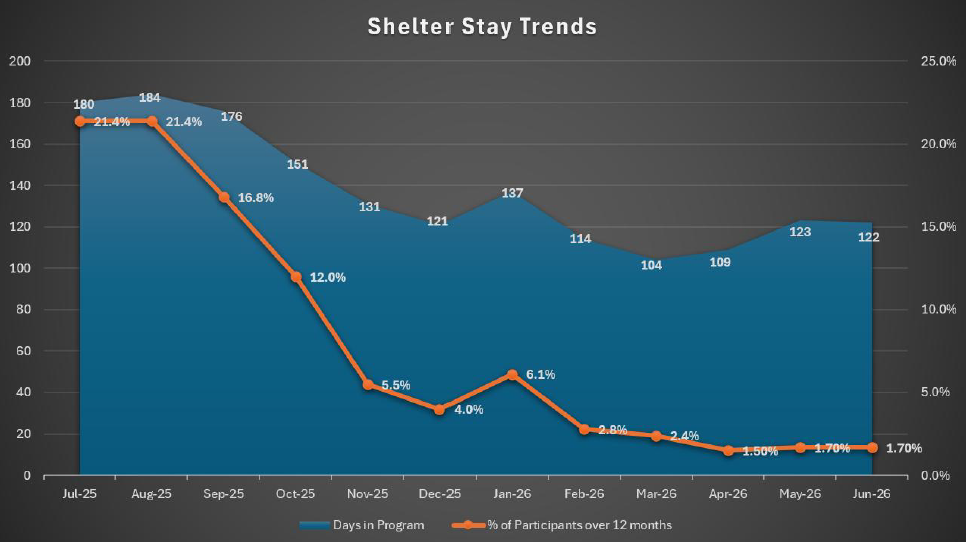
Our goal is for homelessness to be rare, brief, and non-recurring. Rapid Rehousing and Housing Retention directly support that goal. When being able to help more people move to permanent housing at a faster rate and help them retain their housing, we are also able to reduce length of shelter stays and the number of people who are staying with us for longer than 12 months, while maintaining an above national average for exits to permanent housing destinations. In the past fiscal year, the length of time someone has stayed at Good Shepherd’s overnight shelter has decreased by 32%, going from 180 days to 122 days.
The percentage of people who have been in our overnight shelter for over one year has dramatically decreased by 92%, moving from 21.4% of the total people staying with us to just 1.70% of the total, all while continuing to serve the greatest number and most challenged of unhoused persons as the region’s lowest barrier emergency shelter.
With just over one year remaining in this three-year commitment, Good Shepherd is positioned to build on this momentum, sustaining faster placements, deeper retention support, and shorter shelter stays for the neighbors still ahead of us.
The Endowment’s investment has not only changed lives, it has proven that homelessness can be made rare, brief, and truly non-recurring when evidence-based practices are fully resourced. We’re deeply grateful for this partnership and the opportunity to continue this work going through year three.”