
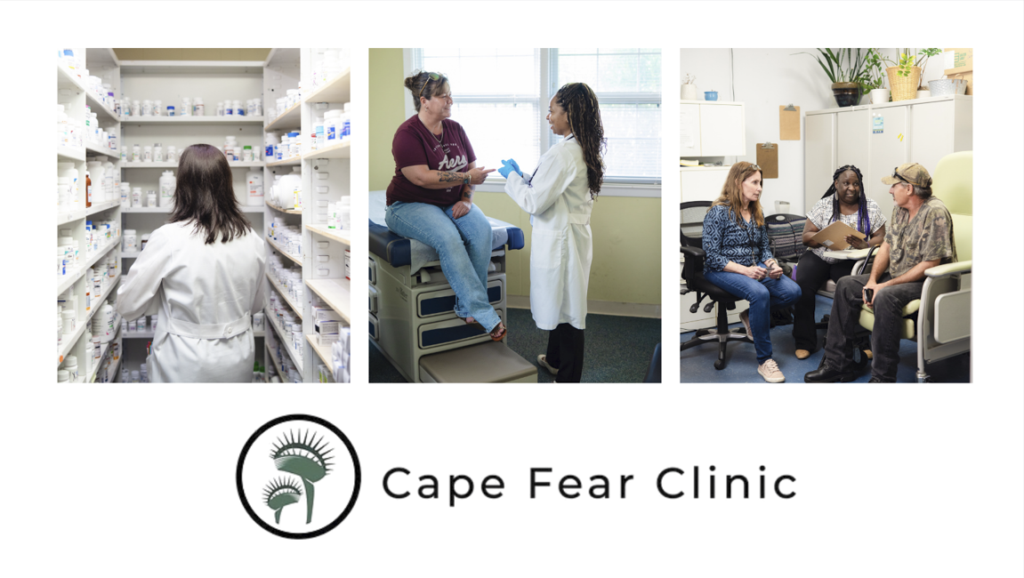
For adults without health insurance, care is often out of reach long before they ever see a doctor. Many don’t know where to go. Others can’t get to an appointment or afford the medication they’re prescribed. Too often, they go without care until a problem becomes an emergency.
Cape Fear Clinic works to change that and to break down the other barriers that keep people from care. The free and charitable clinic provides medical, pharmacy and mental health services to uninsured adults. It also recognizes that the people who most need its care are often the hardest to reach, so instead of waiting for them to find the clinic, it goes to them, through community organizations they already know and trust.
The investment
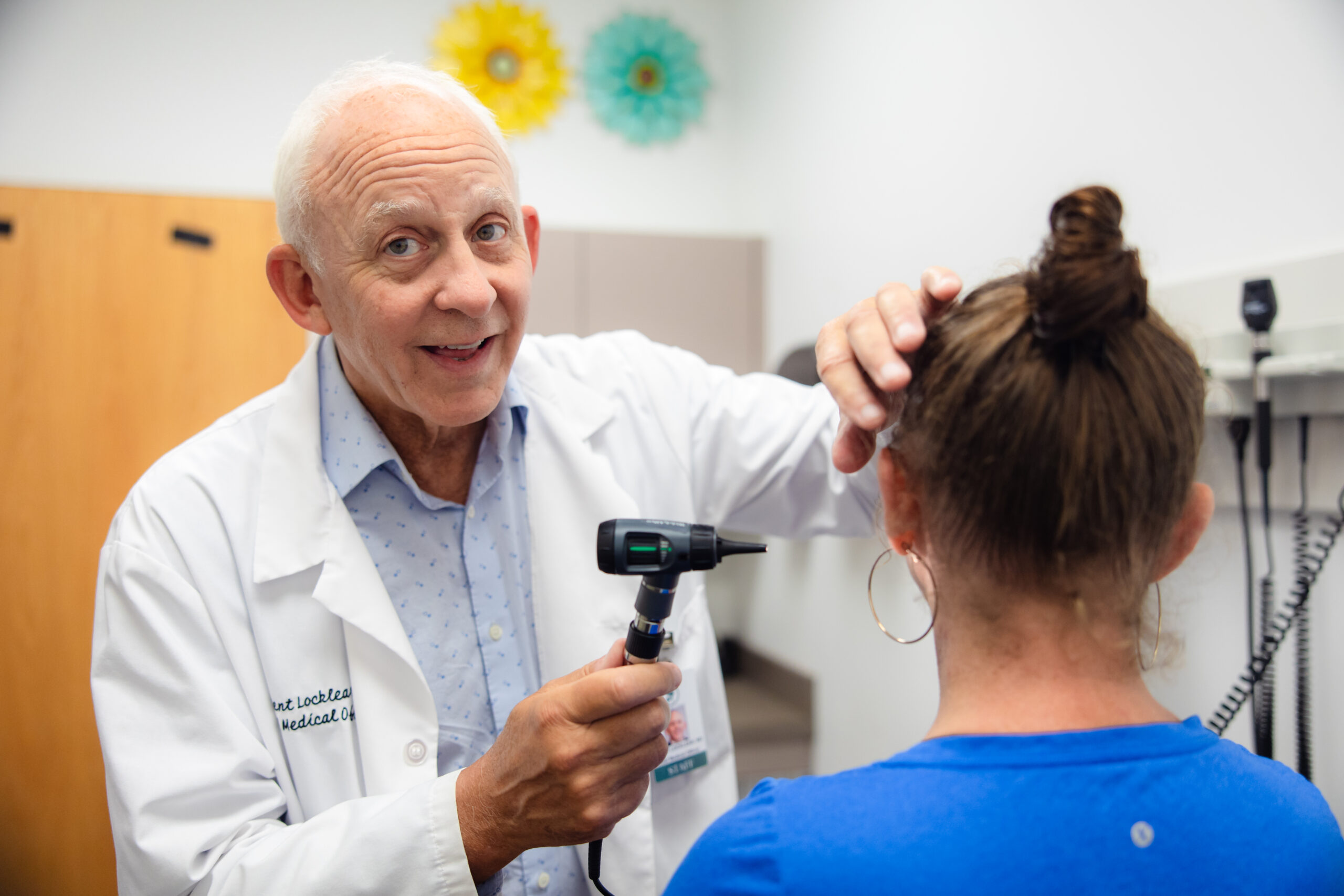
In 2023, the Endowment awarded Cape Fear Clinic a three-year, $1.2 million grant to expand that approach through four partner organizations: The Healing Place, Good Shepherd Center, LINC and A Safe Place. By meeting people at these partner locations, the clinic reaches uninsured residents who might otherwise go without care, addresses their immediate needs and, opens the door to ongoing care, with Cape Fear Clinic as their medical home and access to medications through its full-service pharmacy.
The results
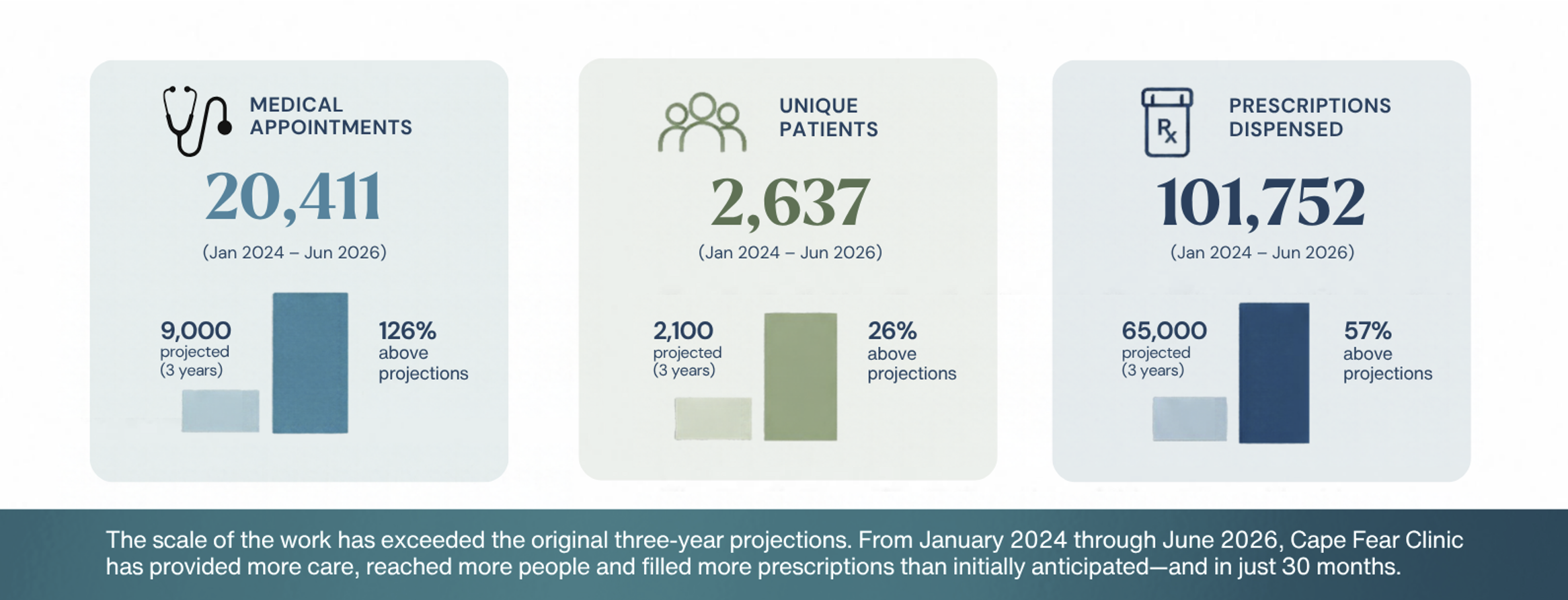
The clinic set projections for the full three years of the grant. It surpassed every one of them in just 30 months. From January 2024 through June 2026, Cape Fear Clinic:
- provided 20,411 medical appointments, against a three-year projection of about 9,000
- served 2,637 patients, against a projection of about 2,100
- dispensed 101,752 prescriptions, against a projection of about 65,000
More than an appointment
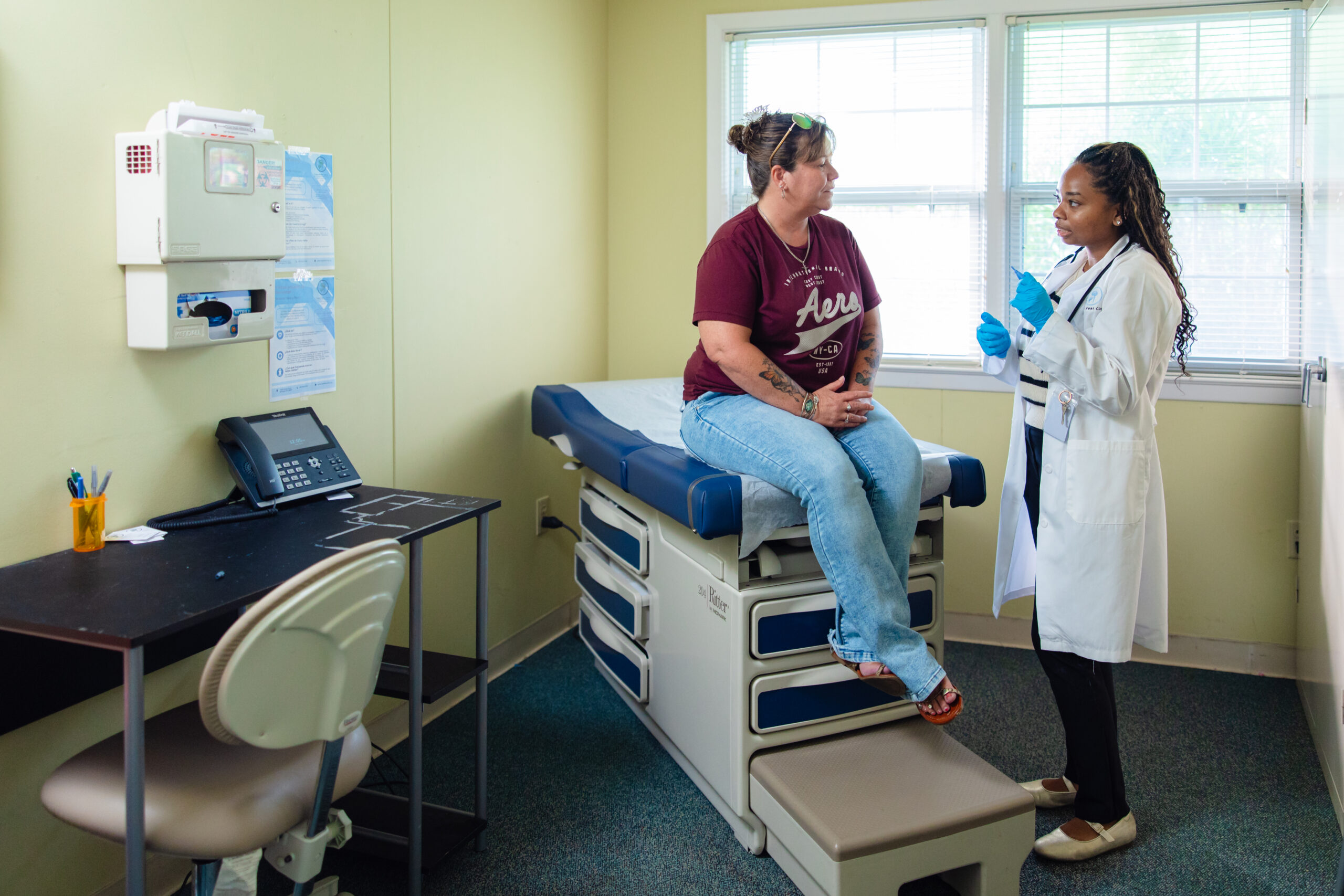
Those numbers tell only part of the story. Some patients arrive after a hospital visit. Others come through shelters, recovery programs or community partners. Still others walk in unsure where to begin. Whatever brings them in, the team starts by listening.
“Providing medical care is only part of what we do,” said Dr. Jennifer Buxton, the clinic’s Chief Operating Officer and Chief Pharmacy Officer. “We know that writing a prescription doesn’t help much if a patient can’t afford to fill it, and making a referral means little if they can’t get to the appointment. Our approach is about recognizing those barriers and working together to find solutions that actually work for our patients.”
Sometimes that means an appointment or a prescription. Sometimes it means help with an application, transportation, health coverage or a referral to another provider. By coordinating services and following up, the clinic keeps practical obstacles from interrupting care.
For one patient connected through Good Shepherd Center, that coordination protected his sight. When a serious eye condition threatened his vision, Cape Fear Clinic, Good Shepherd and an eye specialist worked together to get him the care he needed quickly. His experience shows what this model makes possible: reaching people through organizations they trust, responding fast when it matters and opening the door to ongoing care.
National recognition
The approach has drawn notice well beyond New Hanover County. In 2026, the National Association of Free and Charitable Clinics named Cape Fear Clinic its Member Organization of the Year, honoring its patient-centered care and its innovative efforts to reach people facing significant barriers to healthcare.
The next chapter
Building on these results, The Endowment awarded Cape Fear Clinic an additional $850,000 in 2026 to strengthen its collaborative model. The grant supports integrated medical, behavioral health, pharmacy and care coordination services through community partnerships, and will help the clinic bring services closer to the people who need them and keep care consistent as patients’ circumstances change.
There is no single path to Cape Fear Clinic. But whether someone arrives through a partner, a referral or the front door, the goal is the same: meaningful access to care, and the support to keep moving forward.